Unlock Your Potential: Discover Top Online Courses for Professionals
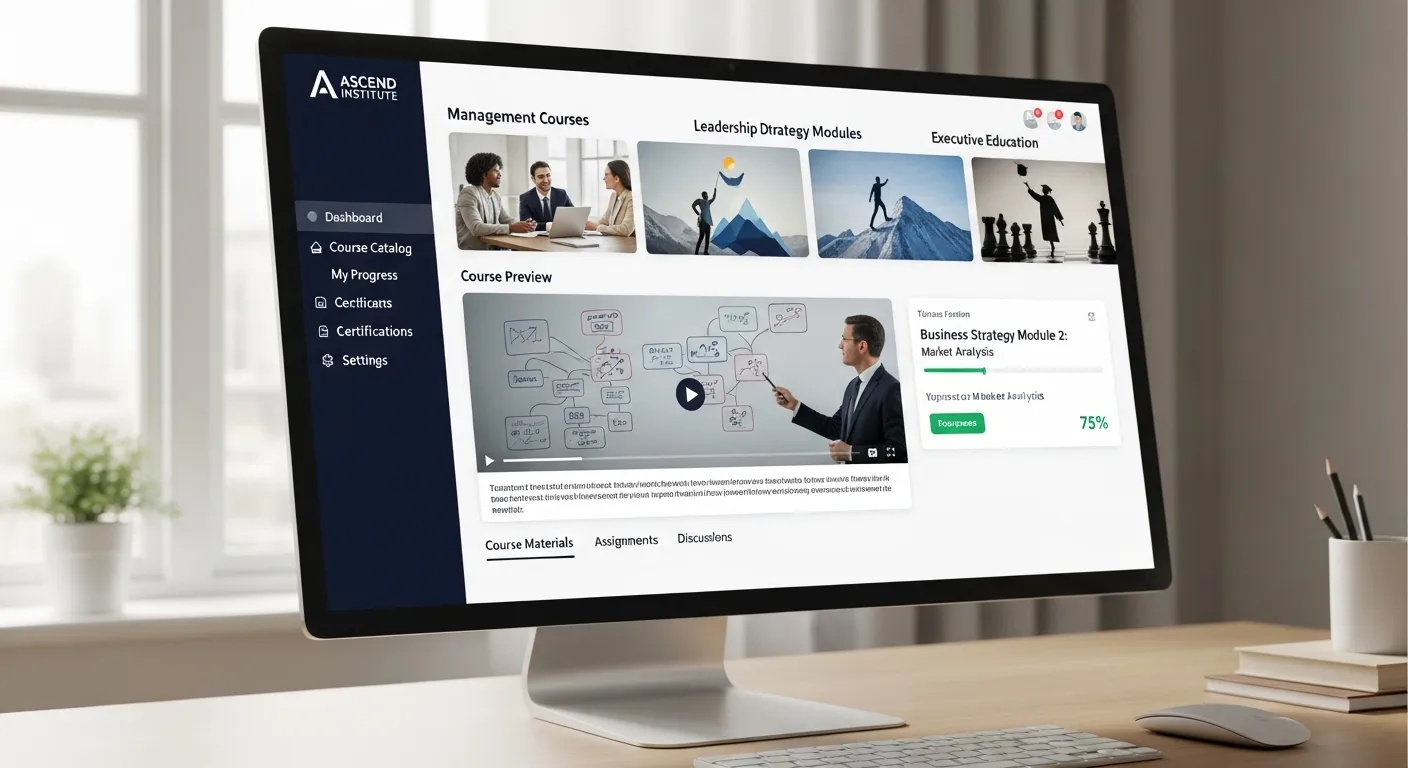
The professional landscape is in constant flux, demanding continuous learning and skill acquisition. To stay competitive and advance your career, investing in online courses for professionals is no longer a luxury but a necessity. Whether you're looking to pivot into a new field, master a specific skill, or gain a deeper understanding of emerging technologies, the right online course can be your most valuable asset. This guide explores how to identify and leverage top-tier online learning opportunities to unlock your potential and achieve your professional goals.
Key Points
- Career Advancement: Upskill to meet industry demands and open new career paths.
- Flexibility: Learn at your own pace, on your own schedule, from anywhere.
- Specialization: Dive deep into niche areas like data science, AI, or digital marketing.
- Credibility: Earn certificates from reputable institutions and platforms.
- Future-Proofing: Acquire skills relevant to the evolving job market.
The Imperative of Lifelong Learning for Professionals
In today's rapidly evolving professional world, stagnation is the fastest route to obsolescence. The skills that were in demand a decade ago might be outdated today, and new technologies and methodologies emerge at an unprecedented pace. This is where the power of online courses for professionals truly shines. They provide an accessible, flexible, and often cost-effective way to keep your knowledge current and your skillset sharp.
The primary driver for professionals to seek out further education is often career advancement. Whether it's a promotion, a transition to a more lucrative field, or simply the desire to be more effective in your current role, acquiring new competencies is paramount. Online platforms have democratized education, making world-class learning opportunities available to anyone with an internet connection. This accessibility allows professionals to tailor their learning journey precisely to their career aspirations.
Why Choose Online Courses for Professional Development?
- Convenience and Flexibility: Traditional education often requires significant time commitment and geographical relocation. Online courses, however, allow you to learn around your existing work and life commitments. You can study during commutes, lunch breaks, or late at night, fitting education into your schedule rather than the other way around. This flexibility is a game-changer for busy professionals.
- Cost-Effectiveness: Compared to traditional degree programs, many online courses offer a more affordable route to skill development. You avoid costs associated with commuting, accommodation, and sometimes even textbooks. Many platforms offer a range of pricing options, including free courses, subscriptions, and individual course purchases, making professional development accessible to a wider audience.
- Access to Specialized Knowledge: The internet has opened doors to learning from the best minds in virtually any field. Online platforms host courses taught by leading academics, industry experts, and renowned practitioners. This means you can learn about niche subjects, cutting-edge technologies, and specialized methodologies directly from those who are shaping the future of their industries.
- Tangible Outcomes and Credibility: Upon completion, many online courses offer certificates, badges, or even micro-credentials. These can be valuable additions to your LinkedIn profile, resume, and professional portfolio, demonstrating your commitment to learning and your mastery of specific skills. Some certifications are even recognized by employers as equivalent to traditional qualifications.
Navigating the Landscape: Top Online Course Platforms and Disciplines
The sheer volume of online learning platforms can be overwhelming. However, understanding the strengths of each can help you find the best fit for your needs. When looking to unlock your potential, consider platforms renowned for their quality and breadth of offerings.
Leading Online Learning Platforms
- Coursera: Known for its partnerships with top universities and companies worldwide, Coursera offers a vast array of courses, Specializations, and online degrees. It's an excellent choice for those seeking academic rigor and recognized credentials in fields like data science and analytics.
- edX: Similar to Coursera, edX is a non-profit platform founded by Harvard and MIT, featuring courses from leading global institutions. It provides high-quality instruction across numerous disciplines, with a strong emphasis on STEM subjects.
- Udemy: A massive marketplace for online courses, Udemy offers a wide variety of practical, skills-based training often taught by industry professionals. It's ideal for acquiring specific, job-ready skills in areas like software development, marketing, and design.
- LinkedIn Learning (formerly Lynda.com): Integrated with the professional networking platform, LinkedIn Learning offers a vast library of video courses focused on business, technology, and creative skills. It's particularly useful for enhancing your professional soft skills and technical competencies.
- Udacity: This platform is heavily focused on technology and data science, offering "Nanodegree" programs designed in collaboration with industry leaders. It's a great option for individuals aspiring to careers in fields like AI, machine learning, and cloud computing.
Popular Disciplines for Professional Upskilling
When considering top online courses for professionals, certain fields consistently emerge as high-demand areas for skill development.
1. Data Science and Analytics
This is a rapidly growing field with immense career opportunities. Professionals are seeking to understand and interpret data to drive business decisions.
- Key Skills: Machine Learning, Statistical Analysis, Data Visualization, Python, R, SQL, Big Data technologies.
- Why it's popular: The ability to extract insights from data is crucial for nearly every industry. Understanding data science and analytics courses can lead to roles like Data Scientist, Data Analyst, Machine Learning Engineer, and Business Intelligence Analyst.
- Latest Trends: Emphasis on AI-driven analytics, ethical data usage, and real-time data processing. A recent report from the International Data Corporation (IDC) in Q3 2024 highlighted a significant increase in enterprise investment in AI and analytics capabilities, underscoring the demand for skilled professionals.
2. Artificial Intelligence (AI) and Machine Learning (ML)
AI and ML are transforming industries, from healthcare to finance to entertainment. Learning these skills can position you at the forefront of technological innovation.
- Key Skills: Deep Learning, Neural Networks, Natural Language Processing (NLP), Computer Vision, AI ethics.
- Why it's popular: Companies are actively seeking professionals who can develop and implement AI-powered solutions. Exploring online courses for AI and machine learning is a strategic move for career growth.
- Differentiated Value: While many courses cover basic AI concepts, look for those that delve into advanced topics like reinforcement learning, generative AI, or explainable AI (XAI), which are gaining traction. According to a study published in "Nature Machine Intelligence" in late 2024, the explainability of AI models is becoming a critical factor for adoption in regulated industries.
3. Cloud Computing
As businesses migrate their infrastructure to the cloud, expertise in platforms like AWS, Azure, and Google Cloud is in high demand.
- Key Skills: Cloud Architecture, DevOps, Cloud Security, Containerization (Docker, Kubernetes), serverless computing.
- Why it's popular: Cloud adoption is a fundamental shift in IT infrastructure, creating a massive need for cloud-skilled professionals.
- Latest Trends: The rise of hybrid and multi-cloud strategies, edge computing, and FinOps (Cloud Financial Operations).
4. Cybersecurity
With the increasing threat of cyberattacks, cybersecurity professionals are essential to protect sensitive data and systems.
- Key Skills: Network Security, Ethical Hacking, Threat Intelligence, Incident Response, Cryptography.
- Why it's popular: The constant evolution of cyber threats means there's a perpetual need for skilled individuals to defend against them.
- Differentiated Value: Beyond general cybersecurity, consider courses focusing on specific areas like cloud security, IoT security, or industrial control system (ICS) security, which are emerging areas of concern. A report from Cybersecurity Ventures in early 2025 projected a significant global shortage of cybersecurity professionals, highlighting the enduring demand.
5. Digital Marketing and E-commerce
The shift to online consumerism has made expertise in digital marketing and e-commerce indispensable for businesses.
- Key Skills: SEO, Content Marketing, Social Media Marketing, Paid Advertising (PPC), Email Marketing, E-commerce platform management.
- Why it's popular: Businesses need to reach their customers online effectively, driving demand for marketing professionals who can navigate the digital landscape.
Enhancing Your Learning Experience and Outcomes
Simply enrolling in a course isn't enough; to truly unlock your potential, you need to engage actively and strategically with the material.
Demonstrating Expertise: E-E-A-T in Online Learning
When selecting courses, consider those that provide evidence of their instructors' Expertise, Experience, Authoritativeness, and Trustworthiness (E-E-A-T). Look for:
- Instructors with real-world experience: Are the instructors practitioners in their field? Do they have case studies or project portfolios to showcase?
- Accreditation and Partnerships: Courses affiliated with reputable universities or industry bodies often carry more weight.
- Student Reviews and Testimonials: What do past learners say about the course's practical applicability and the instructor's teaching quality?
- Up-to-date Content: Is the curriculum current? For example, in data science, a course updated in 2025 will likely cover more relevant tools and techniques than one from 2020.
Leveraging Online Learning for Specific Goals
- Career Change: If you're looking to switch careers, focus on comprehensive programs or Specializations that cover the foundational knowledge and practical skills needed for your target role. For instance, someone wanting to become a Data Analyst should look for data science and analytics courses that include SQL, Python for Data Analysis, and Data Visualization.
- Skill Enhancement: For those aiming to deepen expertise in their current field, look for advanced or specialized courses. A software developer might take a course on advanced algorithms or cloud-native development.
- Entrepreneurship: Aspiring entrepreneurs can benefit from courses in digital marketing, business strategy, finance, and project management to build a solid foundation for launching and scaling a business.
Practical Tips for Online Learners
- Set Clear Goals: Before you start, define what you want to achieve from the course.
- Create a Study Schedule: Treat your online course like a commitment. Allocate dedicated time for learning and practice.
- Engage with the Community: Many platforms have forums or discussion boards. Participate to ask questions, share insights, and network with peers.
- Apply What You Learn: The best way to solidify knowledge is through practice. Work on personal projects or look for opportunities to apply new skills in your current job.
- Seek Feedback: If possible, get feedback on your projects or assignments from instructors or peers.
The Future of Professional Learning
The trend towards accessible, flexible, and specialized online education is set to continue. We can expect to see more immersive learning experiences, greater integration of AI in course delivery and personalization, and a continued rise in micro-credentials and skill-based certifications. Staying ahead in your career means embracing this evolution and making online courses for professionals a regular part of your development strategy.
The field of data science and analytics courses is particularly dynamic, with new tools and techniques emerging constantly. Professionals are advised to continuously update their knowledge, perhaps by following industry publications like the "Journal of Data Science" (published quarterly, last update Q4 2024) or reports from organizations like Gartner.
Frequently Asked Questions (FAQ)
Q1: What are the most in-demand online courses for professionals in 2026? A1: Top fields include data science and analytics, AI/machine learning, cybersecurity, cloud computing, and digital marketing. These areas reflect current and future job market needs for professionals looking to upskill or reskill.
Q2: How can I ensure an online course will help me unlock my potential? A2: Look for courses with strong instructor credentials, positive student reviews, up-to-date curriculum, and practical, hands-on projects. Ensure the course content aligns directly with your career goals and desired skill development.
Q3: Are online course certificates valuable to employers? A3: Yes, many employers recognize certificates from reputable platforms and institutions. They serve as tangible proof of your acquired skills and commitment to continuous learning, especially when paired with a strong portfolio or relevant experience.
Q4: What is the difference between a MOOC and a professional certification course? A4: MOOCs (Massive Open Online Courses) are often broader and may be free or low-cost. Professional certification courses are typically more focused, intensive, and designed to prepare learners for specific industry certifications or job roles, often involving assessments and a formal credential.
Conclusion and Next Steps
Investing in your professional development through online courses for professionals is a strategic imperative in today's fast-paced world. By carefully selecting platforms and courses that align with your aspirations, and by actively engaging with the learning material, you can effectively unlock your potential, enhance your career prospects, and future-proof your skillset.
Don't let your skills become outdated. Take the first step today towards continuous learning and career growth.
What are your biggest professional development goals for the next year? Share your thoughts in the comments below!
For those interested in delving deeper into the world of data, we recommend exploring our related articles on advanced data visualization techniques and the ethical considerations in artificial intelligence.
Potential Internal Link Placements:
- Following "data science and analytics" in the overview: Readers can explore related articles on specific data science tools.
- Following "unlock your potential" in the introduction: Readers can find articles detailing career transition strategies.
- Within the "Data Science and Analytics" section: Readers might be interested in articles on specific programming languages like Python or R.
- Within the "Artificial Intelligence (AI) and Machine Learning (ML)" section: Readers could benefit from learning about the latest advancements in AI research.
- Within the FAQ section, when mentioning employer recognition: Readers can explore articles on building a strong professional portfolio.